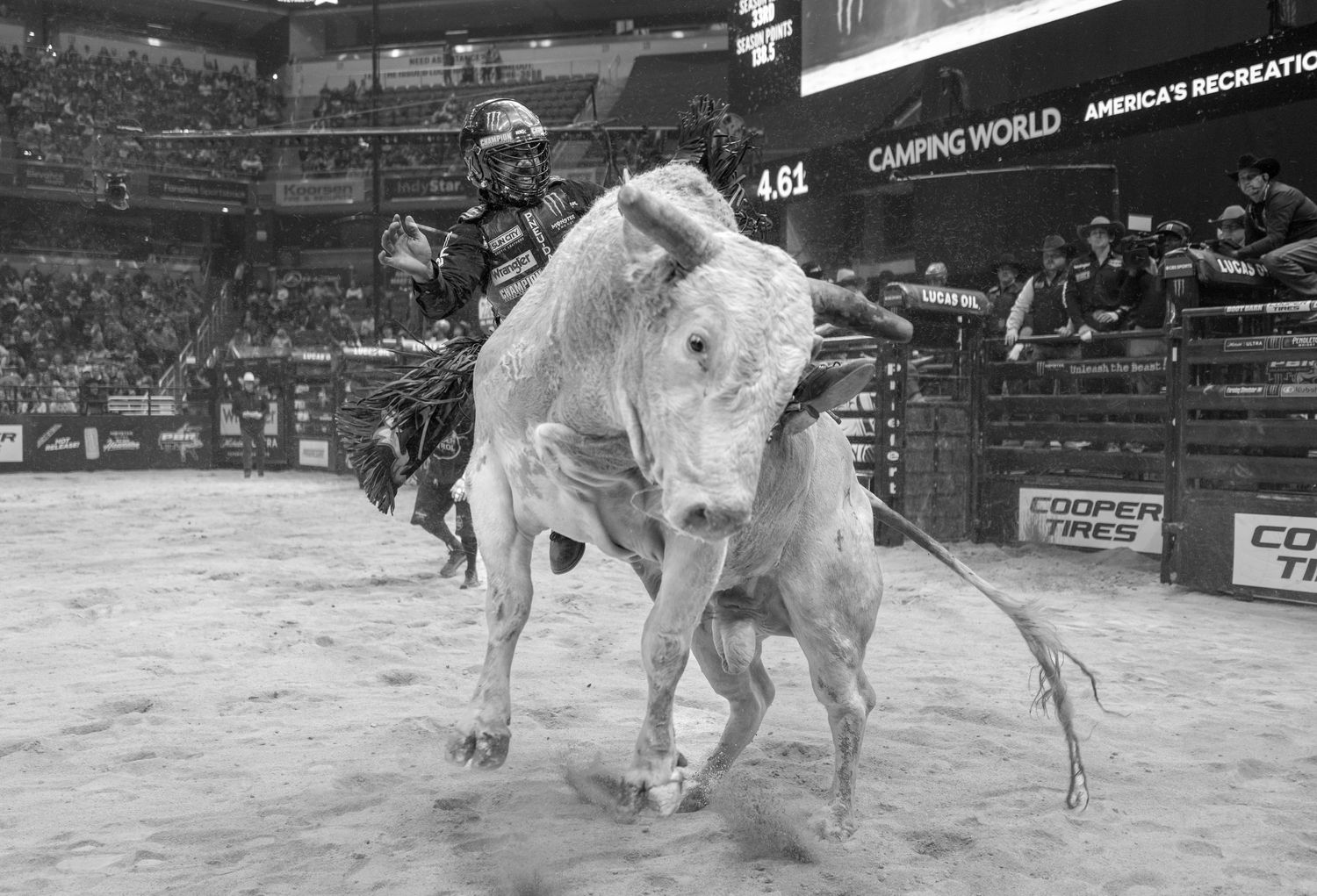
The True American Pastime: Why Rodeo, Not Baseball, Defines the Nation
By Steve Webler
For generations, baseball has been heralded as “America’s pastime,” a romanticized relic of small-town summers and big-league dreams. But if we are honest about the sport that best encapsulates the American spirit—its rugged individualism, its deep ties to history, and its ability to evolve while remaining undeniably tied to its roots—then it is not baseball we should look to. It is rodeo.
Rodeo is America. Not just in its aesthetic—dust rising in the evening light, cowboys gripping broncs with unbreakable resolve, the distant ring of country ballads playing over a loudspeaker—but in its very essence. Rodeo tells the story of endurance, of competition, of survival against forces greater than oneself. It is both work and spectacle, a test of human will against the raw power of nature. Unlike baseball, a game refined in urban settings and played with an ever-increasing distance from its original form, rodeo remains stubbornly, beautifully untamed.
A Historical Legacy Rooted in Labor, Not Leisure
While baseball’s origins can be traced to early 19th-century leisure activities, rodeo was never about play. Its roots lie in the work that built the American West—the cattle drives of Texas, the vaquero traditions of Mexico, the open-range life of cowboys who lived by their ability to rope, ride, and endure. Rodeo evolved not in city ballparks, but in open fields where ranch hands tested their skills against one another, proving their worth not for a crowd, but for the job itself.
By the late 19th century, as the frontier was closing, rodeo transitioned from work to competition. Buffalo Bill’s Wild West show brought cowboy culture into the mainstream, and soon, towns across the West began hosting formalized rodeos, turning the skills of daily ranch life into a sport. The first professional rodeo was held in Prescott, Arizona, in 1888, and by the early 20th century, rodeo had become an institution, solidifying itself as the most American of contests—one that measured a man’s grit not by statistics, but by seconds.
Demographics: The True Diversity of the American West
Rodeo, despite stereotypes, is not a sport of just white men in cowboy hats. In fact, its history is far more diverse than baseball’s. Latino vaqueros were the first true cowboys, teaching cattle-ranching skills that formed the basis of American rodeo. Black cowboys, who made up as much as 25% of the frontier’s workforce, competed alongside their white counterparts in early rodeos—despite often being excluded from the professional leagues that later formed. Today, the legacy continues in events like the Bill Pickett Invitational Rodeo, which highlights Black cowboy culture.
Native American riders, too, have shaped rodeo’s evolution. From the bareback riding traditions of the Plains tribes to the modern-day Indian rodeo circuit, Indigenous competitors have maintained their presence in the sport for generations. Women, who have historically faced barriers in professional rodeo, are now reclaiming their place, particularly in barrel racing and breakaway roping, two of the sport’s fastest-growing events.
Compare this with baseball, a sport that, despite its proud integration moment with Jackie Robinson, has seen a decline in Black American participation for decades. Major League Baseball, for all its nostalgic appeal, has become increasingly disconnected from working-class and rural communities. Rodeo, by contrast, has remained rooted in the places where hard work is still a way of life.
Culture: Where Tradition and Modernity Collide
If baseball represents an America of box scores and corporate sponsorships, rodeo embodies an America that still prizes self-reliance and raw skill. It is a sport where millionaires are rare, where competitors often travel from town to town in pickup trucks, and where success is determined not by contracts but by sheer ability.
Rodeo’s soundtrack is country music, its dress code denim and boots, its venues county fairs and small-town arenas. But it is not stuck in time. Professional Bull Riders (PBR) has transformed bull riding into a global phenomenon, with events selling out Madison Square Garden and drawing international competitors from Brazil, Canada, and Australia. The National Finals Rodeo in Las Vegas attracts thousands each year, a Super Bowl of sorts for those who understand that toughness is not measured in yards, but in seconds on the back of a twisting, 2,000-pound bull.
More than any other sport, rodeo is defined by risk. There is no guaranteed contract, no bench to retreat to, no second chances. You either ride or you don’t. You either rope the calf or you miss. It is a pure meritocracy, unfiltered by technology, dependent entirely on human and animal instinct.
Politics: The Last Stand of the American Cowboy
To say rodeo is political is to state the obvious. It is a sport deeply tied to the identity of rural America, a counterpoint to the urbanized, corporatized world of mainstream professional sports. While the NFL and NBA wrestle with culture wars over player protests and league politics, rodeo remains defiantly itself—a space where patriotism is non-negotiable, where the national anthem is never skipped, and where competitors pray before they ride.
But rodeo is not merely a conservative stronghold. It is also a rebellion against the sanitized, risk-averse nature of modern sports. In an era of analytics-driven baseball and helmet-to-helmet rule changes in football, rodeo is refreshingly real. It is also one of the few sports where men and women compete for equal prize money, a testament to its unspoken egalitarianism.
It is no surprise that rodeo thrives in a country divided between rural and urban values. To those who see America as a nation of hard work, self-sufficiency, and tradition, rodeo is not just a sport—it is a way of life. To its critics, it is an outdated relic of a bygone era. But to dismiss it is to misunderstand the heart of America itself.
Conclusion: The True Test of the American Spirit
If baseball is America’s pastime, it is a pastime in the truest sense—a sport of leisure, statistics, and nostalgia. Rodeo, however, is not about the past. It is about survival, about the present moment, about man versus nature, instinct versus control. It is not played in pristine stadiums, but in dirt arenas, in places where the frontier spirit still burns.
Rodeo is the last stand of the American cowboy, the final battleground of raw athleticism, courage, and tradition. And as long as there are those willing to mount a bucking bronc or take on the impossible eight seconds, it will remain not just a sport—but the most American of all pastimes.
